


From Tangra to Singapore
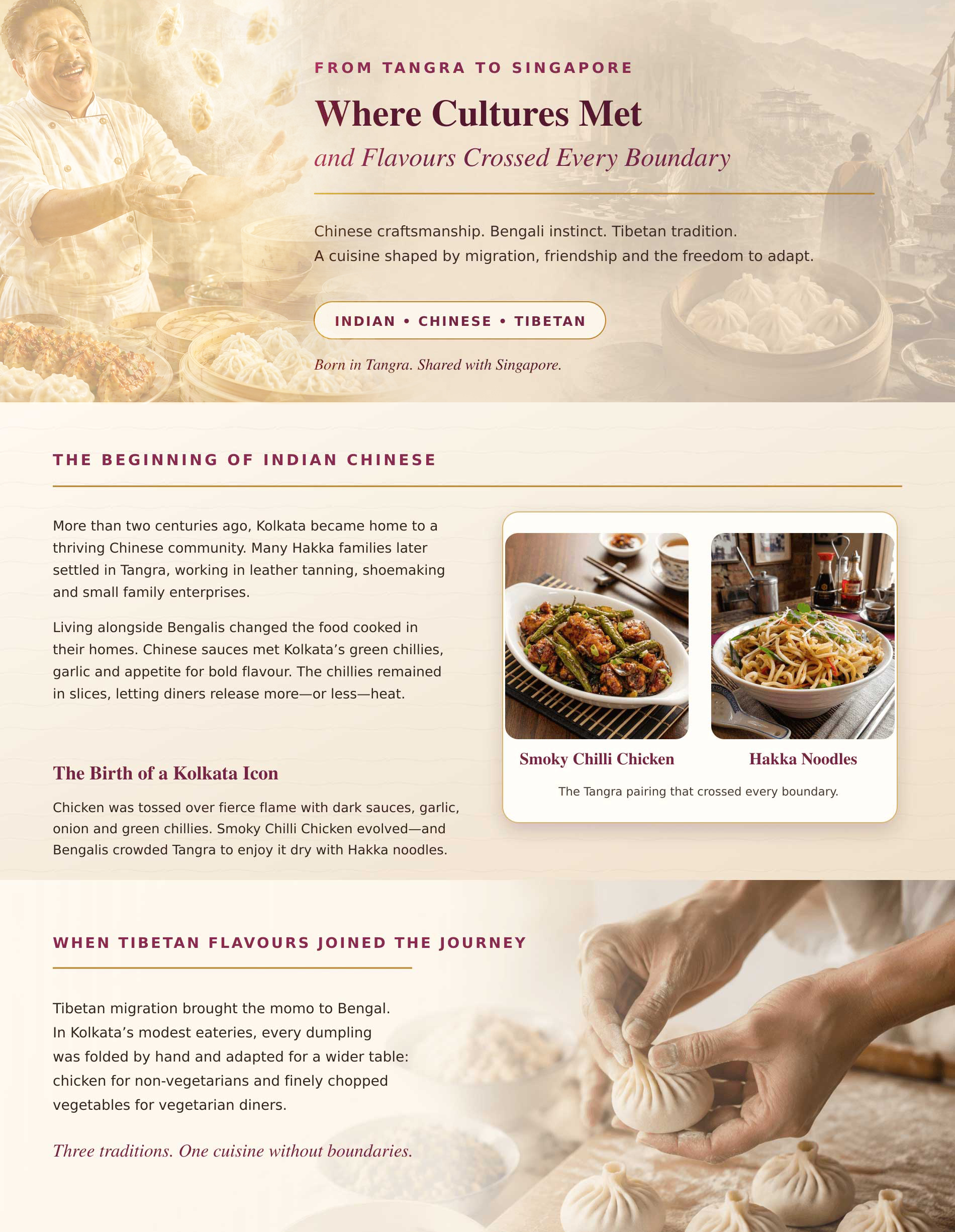
Where Cultures Met
and Flavours Crossed Every Boundary
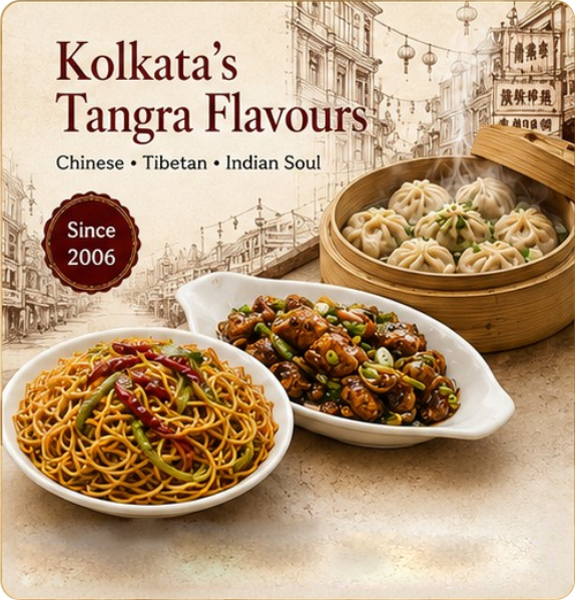
Chinese craftsmanship. Bengali instinct. Tibetan tradition. A cuisine shaped by migration, friendship and the freedom to adapt.
Indian · Chinese · TibetanBorn in Tangra. Shared with Singapore.
The Beginning of Indian Chinese
More than two centuries ago, Kolkata became home to a thriving Chinese community. Many Hakka families later settled in Tangra, working in leather tanning, shoemaking and small family enterprises.
Living alongside Bengalis changed the food cooked in their homes. Chinese sauces met Kolkata’s green chillies, garlic and appetite for bold flavour. The chillies remained in slices, letting diners release more—or less—heat.
The Birth of a Kolkata Icon
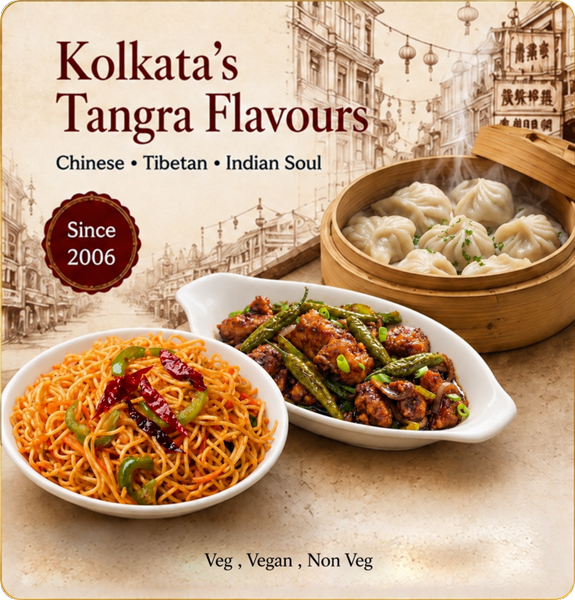
Chicken was tossed over fierce flame with dark sauces, garlic, onion and green chillies. Smoky Chilli Chicken evolved—and Bengalis crowded Tangra to enjoy it dry with Hakka noodles.

When Tibetan Flavours Joined the Journey
Tibetan migration brought the momo to Bengal. In Kolkata’s modest eateries, every dumpling was folded by hand and adapted for a wider table: chicken for non-vegetarians and finely chopped vegetables for vegetarian diners.
Three traditions. One cuisine without boundaries.

Why Tangra Chinese Came to Singapore
Deepali Ray noticed people separating at lunchtime because of dietary, cultural and religious preferences. That simple observation inspired Tangra Chinese in Singapore—a true meeting of Indian, Chinese and Tibetan culinary traditions.
The purpose was larger than a menu: create one table where people of every race, religion and country could eat together.
Food binds people. Shared tables soften boundaries.
Read More

One Belief, Growing Through Time
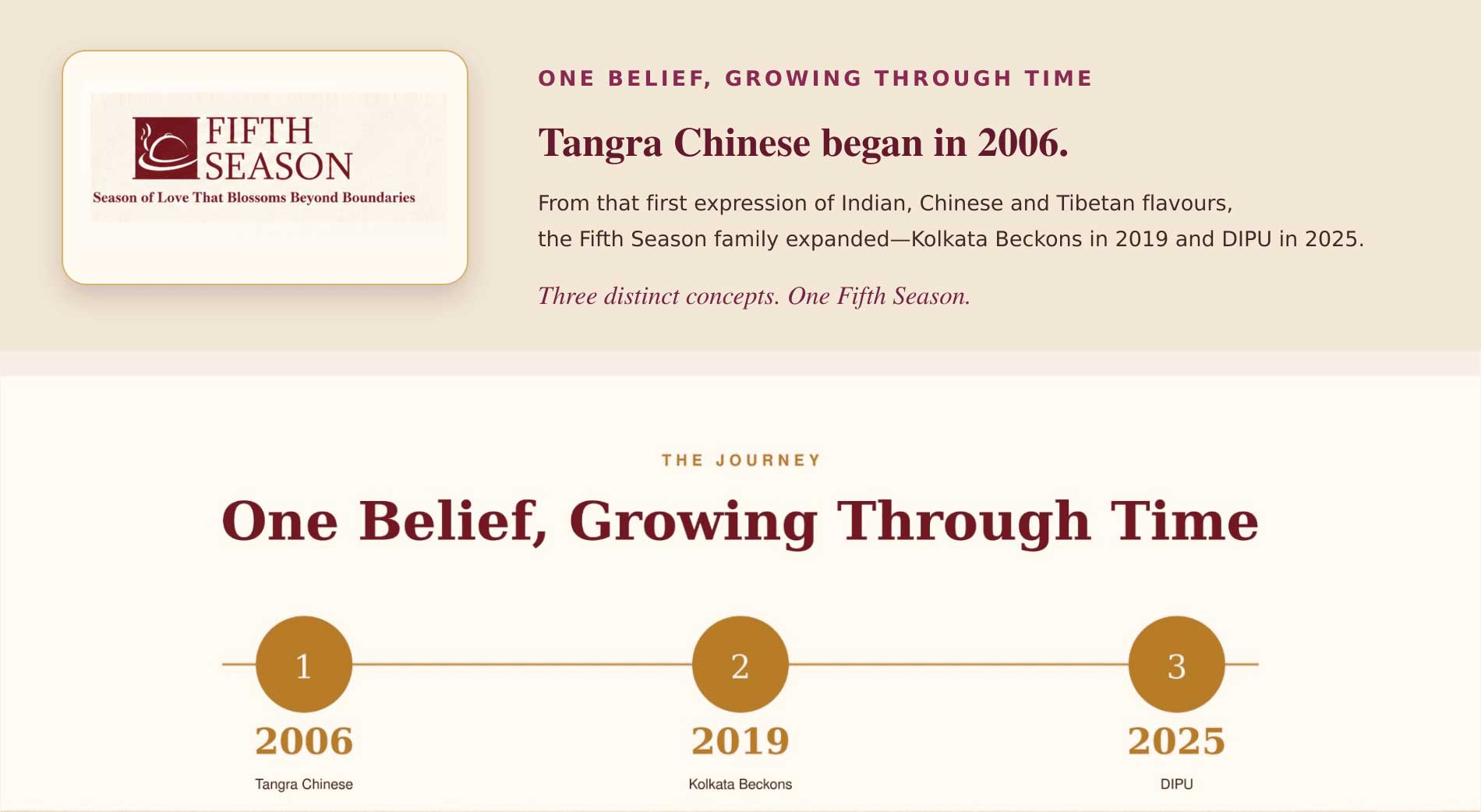
Tangra Chinese began in 2006.
From that first expression of Indian, Chinese and Tibetan flavours, the Fifth Season family expanded—Kolkata Beckons in 2019 and DIPU in 2025.
Three distinct concepts. One Fifth Season.
The Journey
One Belief, Growing Through Time